Wingman competitive · how I positioned against Gong, on Gong's home turf. Without bashing them.
Wingman was a conversation intelligence platform.
Gong had defined the category, raised heavy, and owned the buyer's first search.
The brief was simple. Keep playing in Gong's category. Stop fighting on Gong's terms.
The comparison pages were where the positioning actually had to hold up against a buyer who'd been on a Gong demo the week before.
What it was
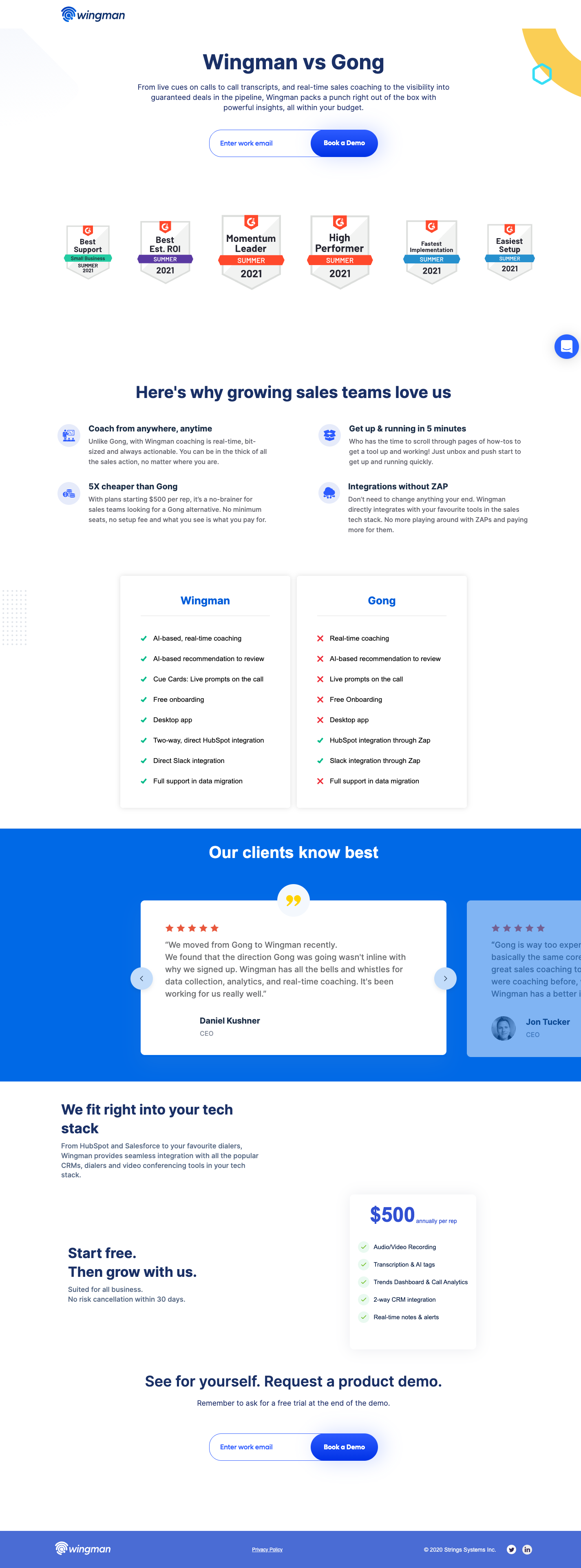
Generic "vendor X vs vendor Y" comparison pages were the category default. Feature tables. Checkmarks. A green column for "us" and a red column for "them." Buyers had read fifty of those before they hit ours. They worked for SEO. They did nothing for trust.
What I did instead
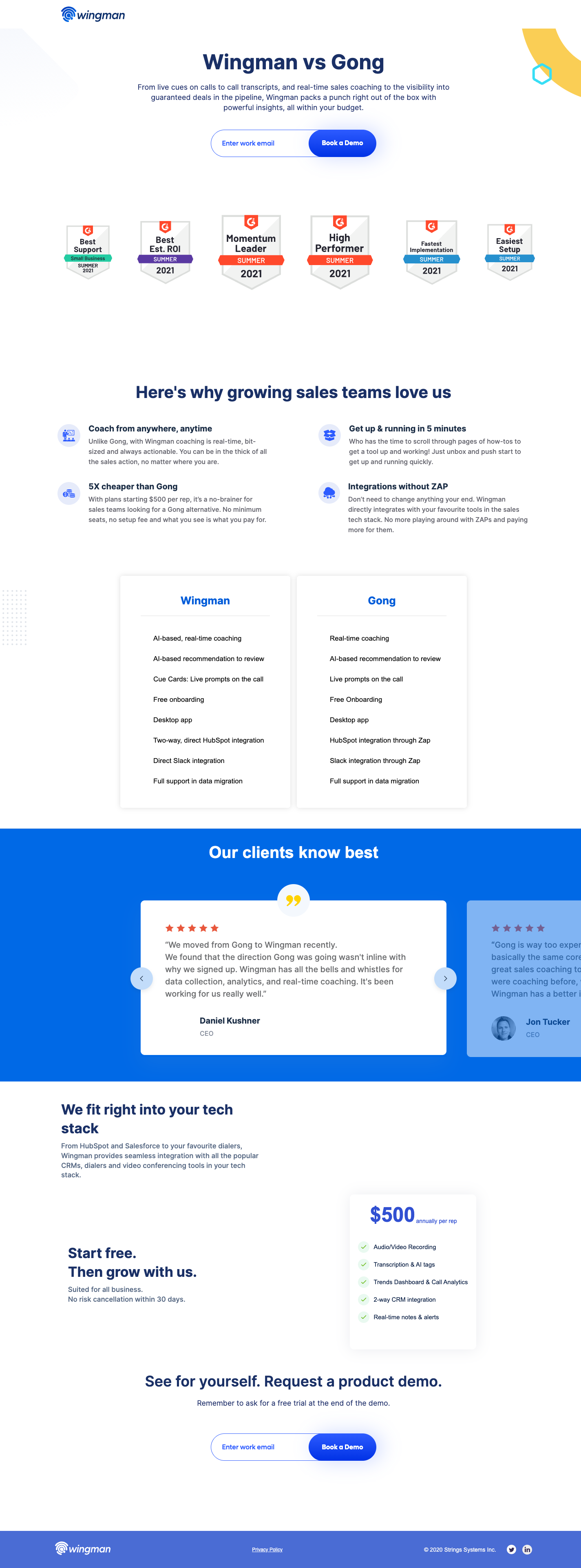
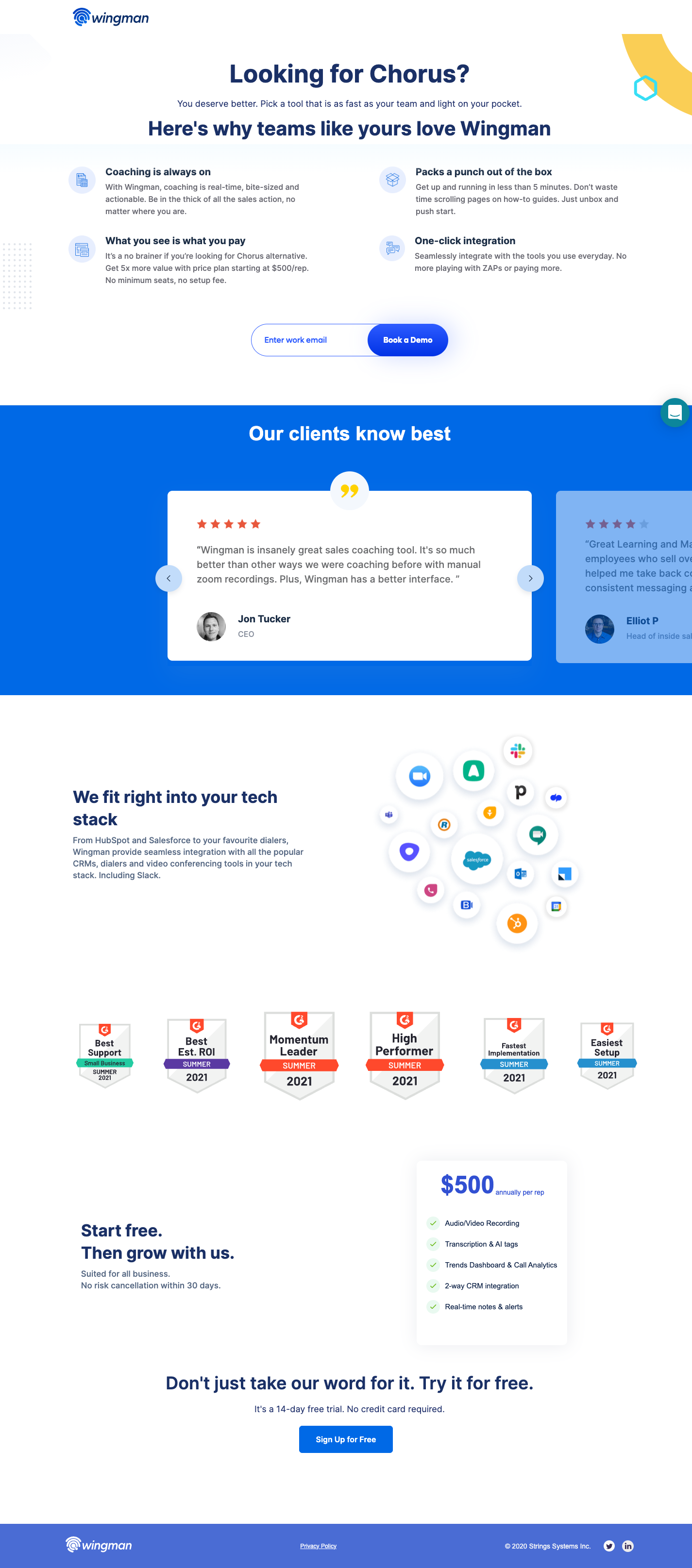
Opened the Gong comparison page with a real concession. "We actually like Gong." Then reframed the buying criteria around the jobs Wingman was actually built for: real-time coaching, async review, fast onboarding for smaller teams. Same move on the Chorus page. Same move on the alternative-keyword variants. The honesty was the differentiator. Stating what Gong did well bought the right to say what Wingman did differently.
The receipts
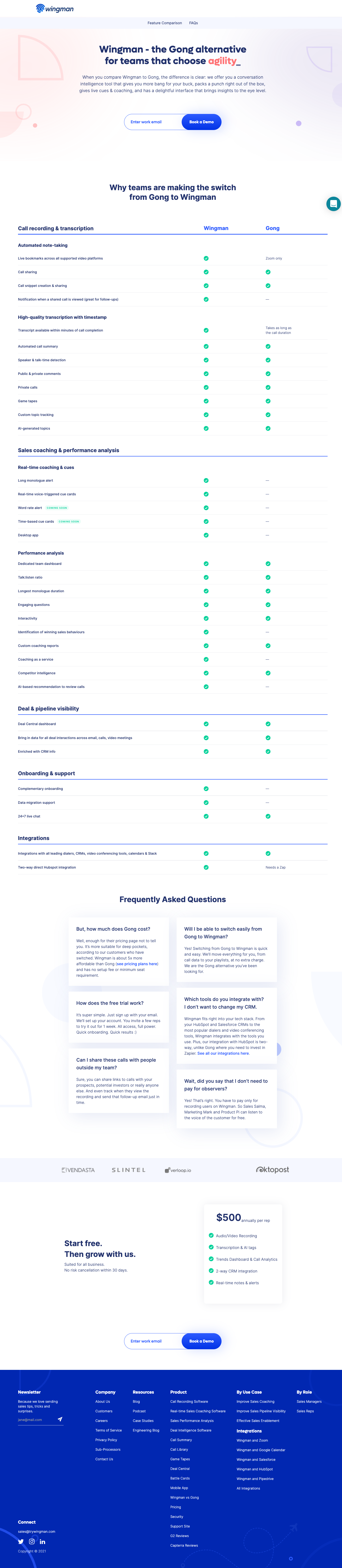
Four Wayback snapshots from the live Webflow build. Each page individually verifiable.
What I actually did
- Read every public Gong customer review (G2, Capterra) and every Chorus review. Coded the language of frustration. The pattern was clear: Gong felt overbuilt for sub-200-person teams.
- Wrote the Gong page with an opening concession. "We actually like Gong." Tested it against three sales reps. They picked it over the standard "us vs them" frame, 3-0.
- Same structure for Chorus. Same structure for Avoma, Balto, Dooly, ExecVision, Salesken, Salesken alternative-keyword pages.
- Built two variant sets: alternative-keyword LPs (for SEO traffic searching "[competitor] alternative") and direct-vs LPs (for buyers searching the comparison directly). Both ran simultaneously.
- Shipped seasonal variants. The Black Friday "wingman-vs-gong" page was a Q4 push when Gong was top-of-funnel for budget cycles.
What stayed honest
The 90%+ inbound revenue is from the CEO on a public podcast. The comparison pages are individually verifiable on the Wayback Machine. I cannot tell you which specific page closed which specific deal. The CEO can. What I can show you is the body of work that the inbound machine was reading from.
What it became, in substrate
The honest-comparison page structure, the repositioning move that keeps you inside a category the leader defined, and the G2/Capterra coded-language extraction routine are three of the moves substrate carries forward. The skill, routine, and principle layers are open source for any client to clone and run.
Like what you read? Book 30 minutes.
Pick a slot →